Showing posts with label writing. Show all posts

Thursday, November 6, 2014

Freebies! Buttons, Pete the Cat, Math & Literacy

Over the summer, a friend of mine posted pictures of her son playing with his grandmother's jar of old buttons on Facebook.  My younger son can spend hours sorting and playing with beads, jewels, and other small manipulatives; I knew he'd love to paw through a pile of vintage buttons!  I called my mother, who had kept a box that belonged to her grandmother, and she generously went to dig it out of the attic for us.  After noticing this book online,


I decided to incorporate the buttons into our schoolwork.  We started by reading The Button Box, by Margaret S. Reid.  It's a cute story about a boy going through his grandmother's button box, sorting the buttons and imagining who they might have belonged to.  Colby loved it.


He was thrilled when I put this button box in front of him!
I gave him plenty of time to just enjoy it, and then I asked him to choose one particular button that he really liked.  He selected a matching pair of shiny gold ones, and I gave him this worksheet:


He drew a picture of the button in the center, and then came up with five adjectives to describe it.


I asked him to imagine who might have worn the buttons, and he thought they probably came from some sort of military uniform.  He drew a picture of a soldier wearing the button, and then wrote about it.  
(There are several versions for different ages and writing abilities, and each version comes in color or black-and-white.)


Next, I asked him to sort the buttons.  We talked about all the different ways we could sort them: by size, or shape, or what they were made of, or how old they were.  Then he wrote down some of these ideas on this worksheet:


Finally, we completed this pocket chart activity.  Colby matched the button cards with the appropriate numerals and number words.  He loves the way it looks so much that we're leaving it intact until we need the chart again!


Who else loves buttons?  Pete the Cat, of course!  We read  Pete the Cat and His Four Groovy Buttons, by Eric Litwin.   This is such a cute book!


We did some simple descriptive writing, with an illustration of course.  This page is from Team Sugar's Pete the Cat Journal Writing Prompts.  It's such a cute packet of writing pages, and so inexpensive!


This super fun Pete the Cat Subtraction Mat is a fabulous freebie from Learning With Mrs. Parker.  Check out her blog and snag a copy here!


We did some addition with these button ten frames and two d10 dice.


There are two different colored ten-frames for each number 1-10, so they can be used for adding doubles, or more complex addition.  (They're not all shown in the photo).  


We finished up with buttons and continued with Pete the Cat, moving on to Pete the Cat: I Love My White Shoes by Eric Litwin.  This is my favorite Pete book thus far!  No matter what he steps in, Pete keeps his characteristic positive outlook and loves his shoes.


Colby really enjoyed this cause and effect activity by Allison Palm.


It comes with these great pocket chart cards, which we chose to use on the floor,


and this follow-up sheet.  Colby got to choose his own cause-and-effect scenario for Pete and his beloved white shoes.  Pete stepped in purple paint, and ended up with purple shoes!  You can find these activities right here.  (Super inexpensive!)


The next day, we moved on from learning about cause and effect and focused a little more on color words.  This fun freebie from Made For 1st Grade is actually meant to be assembled into a class book, but it works just as well for a single student!  I knew it was coming eventually - poor Pete stepped in dog poop.  Colby chortled the whole time he practiced writing "brown".


We practiced AB, ABC, ABB, and AABB patterns with this awesome free worksheet from The Groovy Teacher.  Colby loves to color so this was perfect for him!

For lots more Pete the Cat freebies and DIY ideas, try this Pinterest board:


Thursday, June 5, 2014

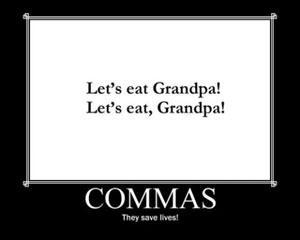
On Commas, or, Why Do the Rules of Grammar Hate Us So?!

I have a confession to make.  I do not like teaching grammar and punctuation.  There are so many rules to teach a child who really isn't interested (at least in my case), and so much practice required to commit it all to memory.  To make matters worse, this difficult subject matter is incredibly important.  College professors, future employers, and even Facebook friends will one day judge my son's grammatical proficiency.  Fortunately for me, there are some wonderful resources out there to make it easier to understand and teach grammar.  

I'm pleased to introduce guest blogger Nikolas Baron, who has written a fabulous post on teaching correct comma usage.  I've been known to sprinkle commas pretty much anywhere, and Nick's clear explanations have been very helpful to me as a blogger, and as a teacher.  Enjoy!

* * * * * * * * * * * * * * *


On Commas, or, Why Do the Rules of Grammar Hate Us So?!

Commas. Ugh. No one likes commas, especially English teachers. They're difficult to teach, and students rarely use them correctly. We can sit and teach students the rules of the comma, but they'll usually end up ignoring them and dropping commas wherever they think a comma should go. This rarely turns out well, usually resulting in a paper with either no commas or too many. How do you even begin to teach such a complex topic to students that honestly don't care?
The primary difficulty is in the complexity of comma rules. Some people argue that there are only four rules for comma usage, while others break those rules down into further rules, increasing the complexity. For example, the Modern Language Association lists a total of 11 comma rules, which is just silly: not even a professional writer can keep track of 11 separate comma rules; what hope do any of us have? What hope do our students have?
In my work with Grammarly, I study the tools writers use to become better writers, and while I wish there were a fool-proof way to teach commas, there just isn't. The best you can hope is to simplify the rules enough that they're easy to understand, and then use some activities to help them practice.
Let's start with rules. In my belief, there are only five comma rules that are crucial to teach:
  1. A comma is used before a coordinating conjunction that separates two independent clauses.
    • Example: “I sat on the couch, and I watched TV.”
  2. A comma is used to offset additional information that describes a noun, called an “appositive.”
    • Example: “The speaker, a world-reknowned author, took the stage.”
  3. A comma is used to separate like items in a list.
    • Example: “I've written for a blog, newspaper, and TV station.”
  4. A comma offsets an introductory clause that comes before the subject of the sentence.
    • Example: “In his right hand, he held his drink.”
  5. A comma separates a quotation from the rest of the text.
    • Example: “She pulled him aside and said, “This is important.”
As previously mentioned, there are certainly more comma rules, but I believe these are the most important. Once your students seem to have a good grasp on these rules, it's time to put them into practice. While you can certainly provide worksheets with sentences that need commas, I feel like worksheets do little to teach the practical use of the rules. To provide practice, I believe we should use activities that encourage our students to think critically about how commas should be used in real situations. Try the following exercises with your students to help them practice the five rules above:
  1. Write three sentences for each comma rule on separate strips of paper. Have your students categorize each sentence by the comma rule it uses.
  2. Have your students write a paragraph using five sentences. Make sure that each sentence uses at least one of the comma rules above.
  3. If you have multiple students, have each one write a paragraph that uses the above rules but does not include the commas. Have your students trade paragraphs and add the commas in.
These three exercises are simple ways you can have your students practice the proper ways to use the five comma rules. Keep in mind, however, that no matter how good your students get, no writer is perfect. Comma errors will always fall through the cracks. That's where Grammarly comes in. Over at Grammarly, we offer a comprehensive grammar check that examines a text for over 200 grammatical errors. With good comma practice and a little extra help from Grammarly, you can not only make sure that your students learn about commas, but also ensure that they will always use commas correctly.
------------------------------------------------------//----------------------------------------------------
Bio:
Nikolas discovered his love for the written word in Elementary School, where he started spending his afternoons sprawled across the living room floor devouring one Marc Brown children's novel after the other and writing short stories about daring pirate adventures. After acquiring some experience in various marketing, business development, and hiring roles at internet startups in a few different countries, he decided to re-unite his professional life with his childhood passions by joining Grammarly’s marketing team in San Francisco. He has the pleasure of being tasked with talking to writers, bloggers, teachers, and others about how they use Grammarly’s online proofreading application to improve their writing. His free time is spent biking, traveling, and reading.

Saturday, September 7, 2013

More of Hunter's First Week

Phew!  The first week is behind us!  I definitely have some adjustments to make, but when is homeschooling not a work in progress?

Here's a glimpse at what my older son has been up to this week:


Hunter is reading on an end-of-third-grade level, but he could use some extra work on sight words.  This is a page from Lori Rosenberg's Second and Third Grade Sight Word Packets.  Each 10-word list has six different activity pages.  


We read  "The Day Jimmy's Boa Ate the Wash", by Trinka Hakes Noble.  I still love this book just as much as I did when I was a kid!  To review story elements and summarizing, we did several of the activities from this unit by Hollis Hemmings.  The school bus activity in the picture was my favorite.


Underneath each animal flap, Hunter has written about that animal's problems in the story.  So cute!  He also completed this cause-and-effect foldable:


Here's the cut-and-paste activity on the inside:

In all, we did four activities from this unit, and it was a really fun way to review!  There are many, many more activities in the unit that we didn't use, but I plan to do the whole thing with my younger son when he's ready.  Check it out: Day Jimmy's Boa Ate the Wash Activities and Printables.

For math, we've been using this workbook and supplementing with other books and activities when necessary:


Right now we've taken a break from the workbook and are working our way through Multiplication Mastery: a Program for Basic Multiplication Facts.  Hunter has memorized his times tables, but I wanted to make sure that he really understands the math so that he can build on it. I've been really, really happy with Multiplication Mastery; I'd recommend it to anyone introducing or reviewing basic multiplication.  

To review the four types of sentences and the appropriate punctuation, we used A Perfect Fit: Sorting Sentences with Cinderella.  Activities that allow Hunter to physically sort, match, or sequence are usually much more effective than a worksheet, and this resource was perfect for him.  After sorting the sentences, he picked one from each category to write on the recording sheet with the proper punctuation, and then illustrated them.  Can you make out his fairy godmother in the picture?  So adorable!


We also did this punctuation activity from Cleaning Up Writing, an excellent resource for teaching editing skills:


This packet is a combination of cool worksheets and hands-on activities, divided up by month.  In only one week I've already used three pages, and I know it will be a staple in Hunter's curriculum all year long.

More of what Hunter is working on to be posted soon, plus a separate post for Colby's kindergarten work!  Stay tuned!

Printable activities featured in this blog post were purchased from the following TpT stores: